
Lightning's Technology
The Blueprint for High-Voltage Performance
The shift to electric mobility is no longer a forecast—it is a global industrial mandate. While the first wave of electrification disrupted the automotive sector, the two-wheel industry remains the next frontier for high-performance, high-voltage architecture. At Lightning Motors Corporation, we are moving beyond the era of incremental improvements to deliver the foundational DNA of the next generation of transport.
A Vision of Physics over Phantoms
“For too long, the EV industry has been defined by ‘Spec-Sheet Fiction’—hyperbolic claims designed for investors rather than riders,” says Richard Hatfield, Founder and CEO of Lightning Motors. “At Lightning, we don’t build for venture capital milestones; we build for the laws of physics. Our mission is to bridge the ‘Expectation Gap’ by delivering competition-proven technology that thrives in the real world.”
Our strategy is built on three global pillars:
Architectural Superiority: We believe voltage is the ultimate scalability lever. By championing 800V modular systems, we reduce thermal losses and weight while unlocking faster charging and sustained high performance—capabilities that the 400V standard simply cannot match.
Asset-Light Scalability: Through our Lightning EDGE platform, we are positioning our hard-won IP as a licensing catalyst for global OEMs. This allows us to scale our technology across diverse segments—from superbikes to commuter mobility—without the traditional “Factory Trap.”
Infrastructure Parity: Our vision extends beyond the vehicle to the grid itself. Whether in the high-ambient heat of India or the high-speed corridors of Europe, our technology is engineered to be infrastructure-agnostic, ensuring reliability wherever the road leads.
Scaling the Halo to the Mass Market
The question isn’t whether the ‘Halo-to-Volume’ strategy works—Tesla answered that. The question is who can apply that model with the most efficient use of capital and the highest engineering integrity. With 14+ years of thermodynamic mastery and multiple world records, Lightning is now focused on scaling our competition-proven IP to unlock the mass market.
Our CEO details how Lightning’s competition-proven IP is the scalable asset that unlocks the mass market. READ THE FULL ARTICLE: “LIGHTNING STRIKES TWICE“.
Make Impossible Design Possible
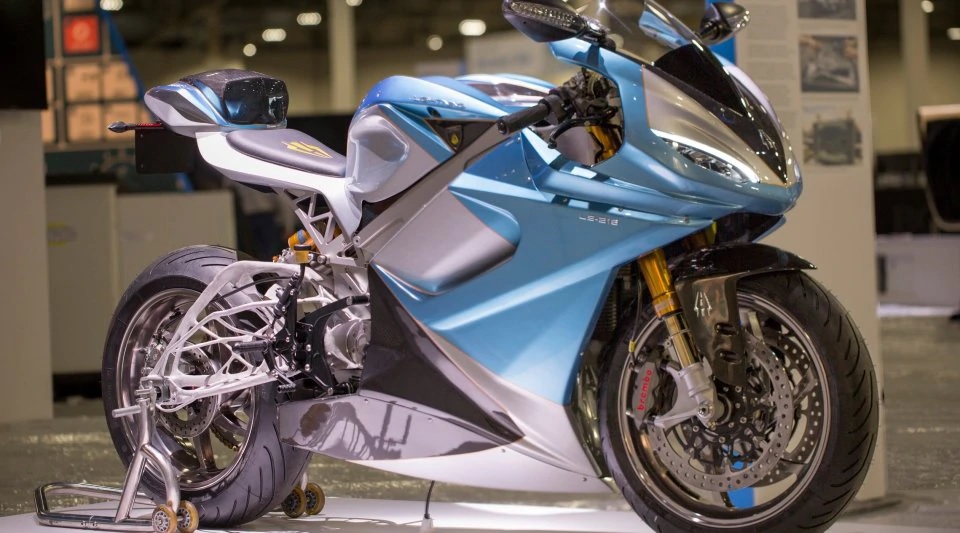
Lightning has partnered with Autodesk to apply AI technology to the engineering design in their record-breaking electric motorcycles. Generative Design is used to quickly iterate hundreds of thousands of design alternatives to optimize the final design to the targets specified by the engineers. Generative Design can be used to optimize manufacturing methods to develop products that not only have superior performance but also hit cost targets.
The Generative Design software creates thousands of unique design options and Lightning engineers work collaboratively to refine the final design.
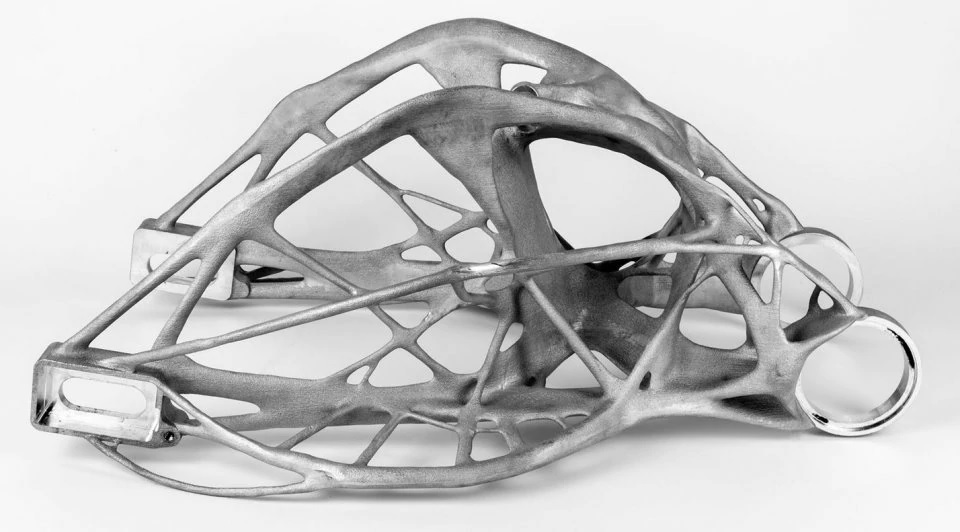
The first project collaboration was focused on using AI to develop a swingarm for Lightning’s LS-218 that achieved a weight savings of in excess of 20% and was stronger than Lightning’s conventional swingarm.
The final design looks very organic. See AI based Lightning swingarm design photos. Watch the video to learn more.
Charging Lightning-Fast
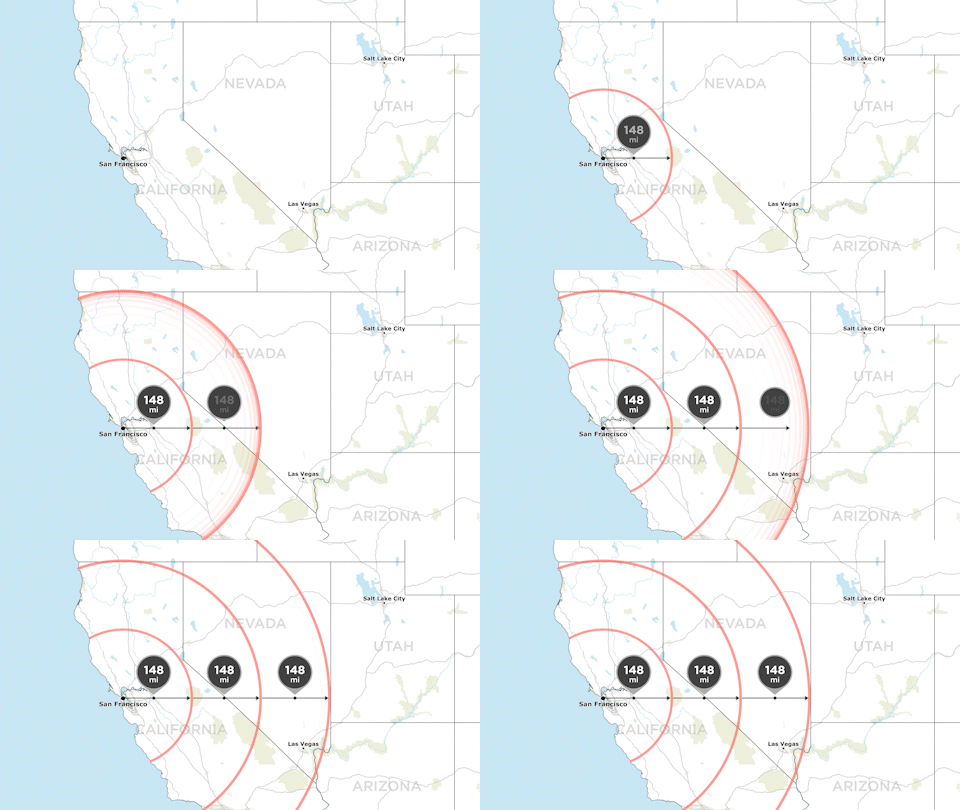
One of the last challenges with electric vehicles has been range and charge time. Lightning’s engineers have developed a system that exceeds the range of similar gas motorcycles and charges nearly as fast as a gas refueling stop.
Lightning’s Fast Charge Battery technology enables charging to over 10kwh in under 6 minutes and to over 20kwh within 15 minutes
Years of aerodynamic testing and careful attention to mechanical efficiency enables Lightning to engineer our motorcycles to achieve longer range even with the same size battery. Overall, riding a Lightning means more time on the road and less time on the cord.

The Power of Lightning
Before manufacturing electric motorcycles for consumers, Lightning engineered and tested our electric motorcycles in competition. We developed electric motorcycles that outperform the top gas motorcycles and then integrated that technology into every motorcycle we build.
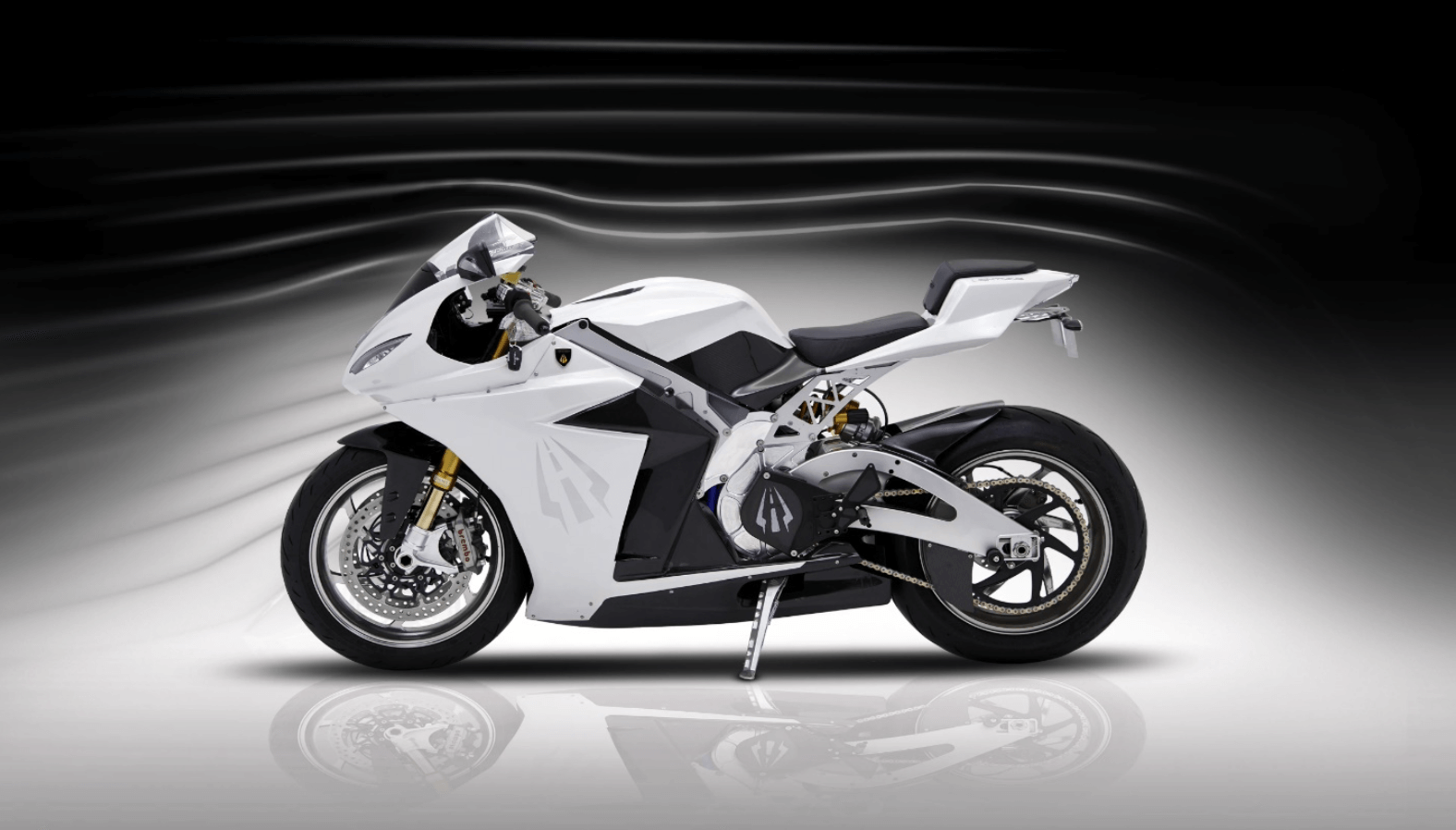
The LS-218 Superbike was designed and engineered to test the limits of what the ultimate electric motorcycle could be. We proved through competition with winning results that we met our goal. The Lightning Strike is an electric SuperSport engineered for the track but designed for the street. The Strike is comfortable navigating complex urban environments as well as exciting weekend adventures or track days. All Lightning electric motorcycles benefit from our competition heritage and proven technologies.
Design for Light Weight
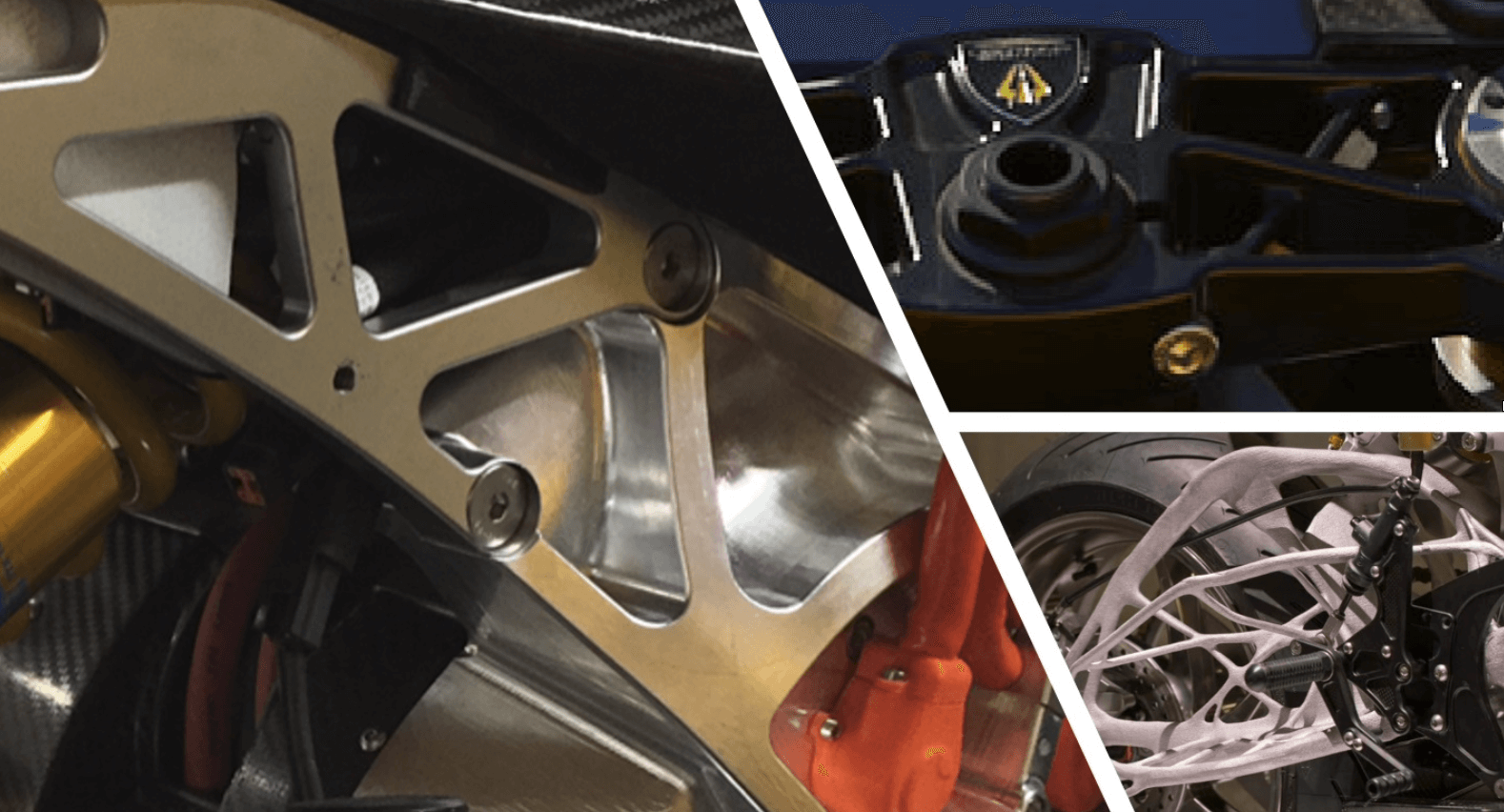
“Weight is the enemy of motorcycle” is the mantra of Lightning engineer teams. To have an agile and good handling bike, weight is a key factor. Lightning achieve light weight through multiple functional areas rather than one-solution-fix-all approach. It is through continuous improvement of the system structure rather than one-time-effort.
In our “Lightning Synergetic System” approach one area the Lightning engineering team focuses on is weight, a critical performance enemy. To have an agile and great handling motorcycle, weight is a key factor. Our teams’ focus on weight reduction through continuous research, testing and validation results in improved performance, range and handling
Engineering for Efficiency
The benefits of weight reduction are obvious but another factor in our “Lightning Complete System” approach is aerodynamics. By sculpting the fairing and bodywork in conjunction with extensive wind tunnel testing and internal competitive analysis indicates that Lightning is by far one the most aerodynamically efficient electric motorcycle on the market today when compared to other non-faired electric motorcycles. We have achieved nearly 30% reduction in aerodynamic drag at 70 mph (112 kph) resulting in improved highway range.
Lightning Dash: Total Transparency in Every Watt
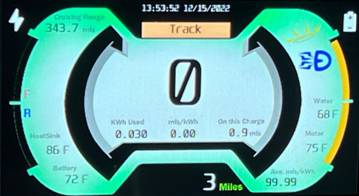
The standard EV “Black Box” model is over. While most manufacturers hide critical system health behind a simple battery percentage, the Lightning Dash provides forensic-level transparency for the rider who demands precision.
Powered by the Lightning EDGE architecture, our dashboard moves beyond basic metrics to provide a real-time window into the physics of your ride.
Performance Mode: Real-Time Stream
For the road, the track, and the record.
When in motion, the Lightning Dash becomes a high-speed telemetry hub. We provide a near-instantaneous data stream of the 90-series battery stack, allowing you to monitor the “Chain of Causality” as it happens.
Millisecond Precision: Watch cell-level voltage and thermal reactivity in real-time.
Glanceable Authority: Designed for high-speed focus, key system vitals are displayed with maximum legibility, providing the confidence to push the limits of the LS-218 or Strike.
Thermal Intelligence: Monitor heat signatures across the pack to optimize performance in extreme ambient conditions.
Forensic Mode: Post-Ride Audit
Deep-dive diagnostics at your fingertips.
Once parked, the Dash transitions into a professional-grade diagnostic suite. No proprietary dealer tools or “gatekeeper” software required.
Cell-Level Audit: Review the individual health and state-of-charge (SoC) of every cell group to ensure peak efficiency.
Infrastructure-Agnostic Reporting: Analyze how different charging environments—from home ports to edge-of-grid DC fast chargers—affect your battery’s long-term State of Health (SoH).
Predictive Maintenance: Identify anomalies before they become issues, moving your maintenance schedule from “reactive” to “proactive.”
Phase 2: Remote Capability
The Lightning Dash is the foundation for our upcoming Remote Diagnostic Ecosystem. Soon, owners and fleet partners will be able to perform over-the-air (OTA) forensic audits and leverage AI-driven predictive maintenance from anywhere in the world.